


COMPOST CALCULATOR - CROPLAND

This widget helps you calculate how much compost you’ll need to apply per bed(s) in your fields using 5-gallon buckets, wheelbarrows, or tractor buckets, depending on your application rate measured in inches.
COMPOST APPLICATION FOR CROPLAND (Per Bed Calculator)


COMPOST CALCULATOR FOR ORCHARDS
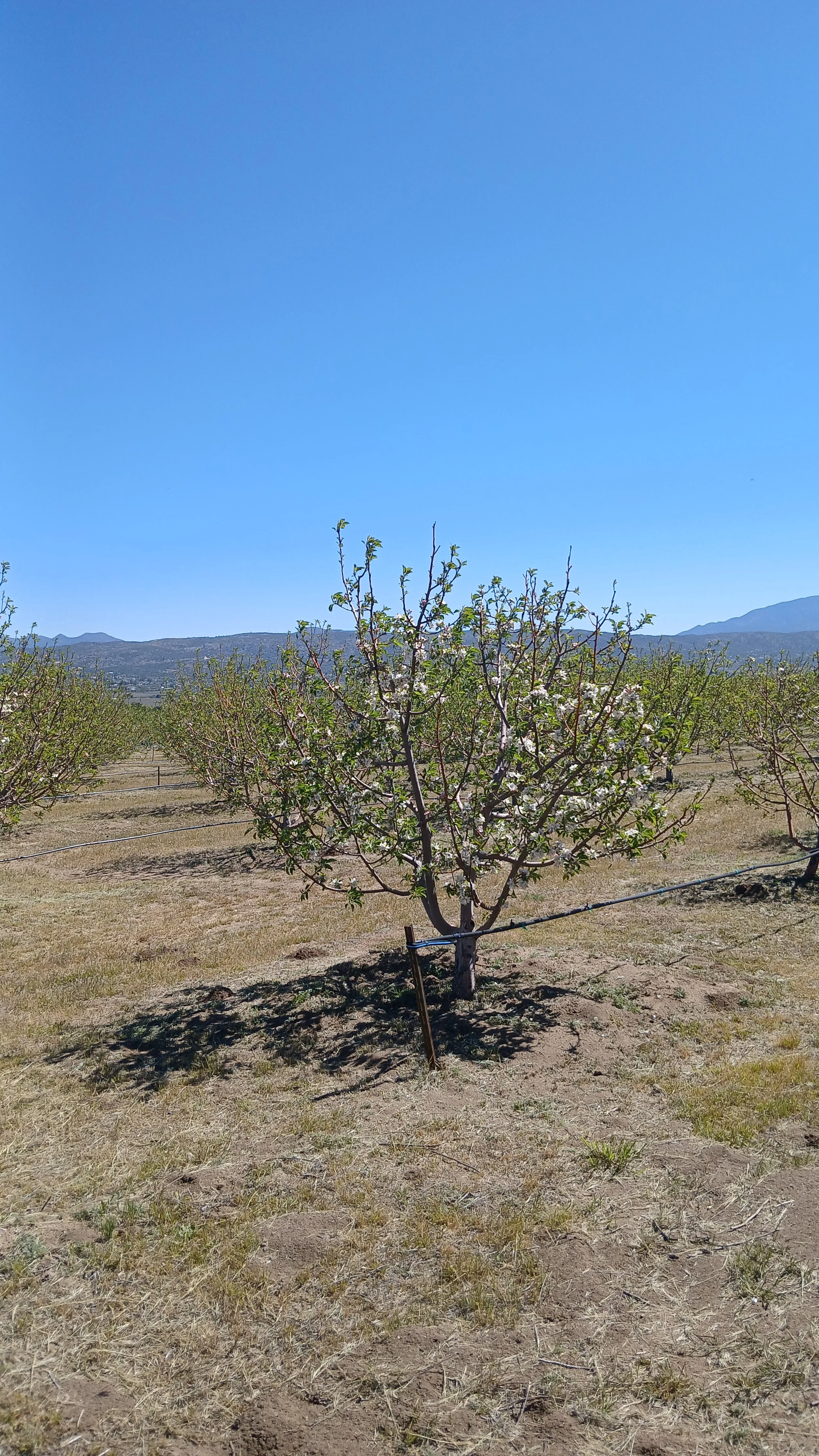
Most common practice in orchards is to apply the compost in a donut or ring-like shape around fruit trees, applying a 4-6 inch thick layer as a top-dressing leaving a gap from the trunk. Evaluate the thickness you’ll need based on your soil type, any soil concern and the CDFA recommended application rates for orchards.
The compost top-dressing replenishes nutrients, improves soil structure, and helps retain moisture in the critical feeder root zone of the trees
The key factors to consider are the area covered by each tree's canopy dripline (minus 1 foot from the trunk) and the desired depth of compost application. Follow these steps to Determine the area to be covered with compost for each tree:
Measure the radius from the trunk to the dripline (outer edge of the canopy) for a few representative trees to get an average radius.
Subtract 1 foot from the average radius to account for the 1-foot gap from the trunk.
add the radius value to the first field in the calculator
add the desired compost application rate
add the total number of trees in your orchard
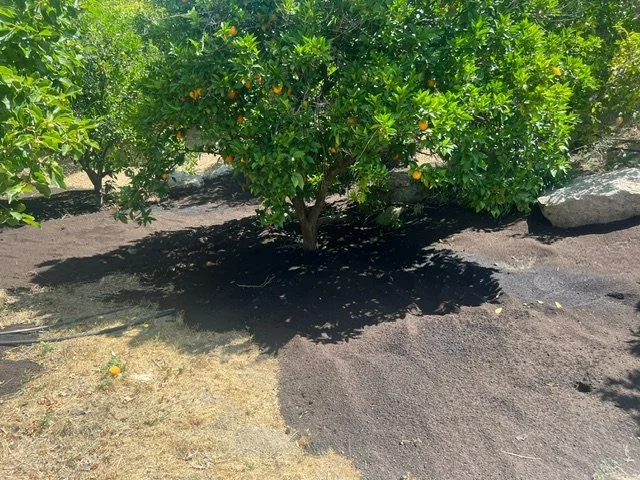

Rule of thumb: apply the material to the soil as soon as practical and get some moisture on it to support the microbial life in the compost and the soil.
If you can’t apply compost to the soil immediately, then make sure you add water to the compost pile and maintain adequate moisture in the pile (it should be moist like a wrung-out sponge and not dripping wet) and cover it with a tarp or shade if evaporation and intense heat are an issue. Be careful not to apply too much water and create an anaerobic situation which can be a real problem degrading the quality of the compost and its benefits.
If the moist pile continues to be warm or even hot, don’t worry about it as the material is continuing to decompose and stabilize. Once spreaded and incorporated in the soil it quickly cools down and continues to decompose but at a much slower rate.